GPS tracking technology has become one of the most valuable tools available to high school football programs. The same technology used by NFL teams and college programs is now accessible to high school athletic departments. And the programs adopting it are seeing measurable results in player health, physical preparation, and coaching confidence.
But not every GPS tracker is built for the realities of high school football. This guide covers what to look for, what separates good systems from great ones, and what the best GPS tracker for a high school football program actually needs to do.
Why High School Football Programs Are Adopting GPS Tracking
High school football presents specific physical management challenges that GPS tracking addresses directly.
Rosters are large, often fifty to one hundred or more athletes across multiple position groups with very different physical demands. Managing load across that many individuals without objective data is an exercise in guesswork. A lineman and a wide receiver playing in the same practice session are experiencing fundamentally different physical realities. GPS data makes both visible simultaneously.
Multi-sport athletes are common in high school programs. A defensive back who also runs track, a linebacker who wrestles in the winter, and a wide receiver who plays basketball are all carrying load from multiple sports throughout the year. GPS tracking gives strength and conditioning coaches visibility into total physical demand across athletic contexts, not just what happens in football practice.
Schedules are demanding. A typical high school football week involves multiple practices, film sessions, and a game. Managing the cumulative load of that schedule requires data, not feel.
What to Look for in a GPS Tracker for High School Football
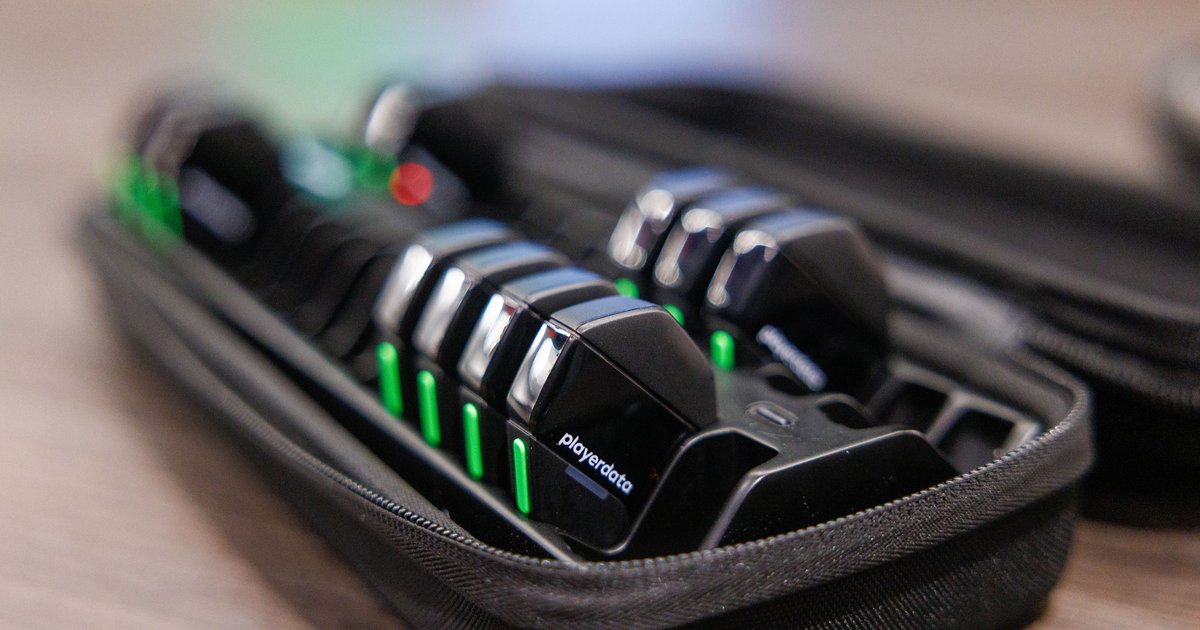
No laptop required. The best GPS trackers for high school football start and sync with a tap on a phone. Systems that require a dedicated laptop connected to a docking station before every session add friction that compounds across a season of daily practice. In a high school environment where strength coaches are managing large rosters without dedicated technical support, simplicity of operation is not a convenience, it is a necessity.
Automatic cloud sync. Data should reach the coaching and strength staff before athletes leave the field. A system that requires collecting every unit, loading it into a dock, and manually initiating a download is a system that delays the information that makes GPS tracking valuable.
Position-specific tracking. Football is a sport of dramatically different positional demands. A slot receiver running routes in a spread offense covers fundamentally different ground than a nose tackle in the same session. The best GPS systems for high school football surface data by position group — showing coaches what each group actually produced rather than a team average that obscures the meaningful variation.
Portability. The system should travel to away games and scrimmages without requiring dedicated transport equipment. A carrying and charging case that fits thirty units in a backpack is a practical standard for any high school football GPS system.
Indoor capability. High school football programs often train indoors during the off-season, during inclement weather, and in weight room sessions that GPS data should capture. A system that only works outdoors misses significant portions of the training year.
The Metrics That Matter Most for High School Football
Total distance and high intensity running distance give strength coaches the baseline picture of physical volume across a session and across a week.
Sprint distance and top speed tell coaches whether athletes are reaching the speeds that maintain their physical capacity across a long season. Athletes who never sprint at high percentages of their maximum in practice lose speed capacity over time — a problem that compounds through October and November when it matters most.
Accelerations and decelerations are particularly important for football. The explosive bursts, direction changes, and reactive movements that define football are captured in acceleration and deceleration data — often at intensities that are invisible from the sideline but highly significant for injury risk and physical preparation.
Session Targets allow coaching and strength staff to set specific metric targets for each session before it begins — and see in real time whether athletes are hitting those targets, falling short, or exceeding them. High days stay high. Recovery days stay low. The intent of every session becomes measurable rather than assumed.
Live Data: The Feature High School Football Programs Value Most
For high school football strength coaches managing large rosters across complex practice structures, live data during practice is one of the most impactful capabilities GPS tracking provides.
Rather than discovering after practice that a Wednesday session was nearly as physically demanding as a Friday game — the scenario that leads to players arriving at game day carrying too much load — coaches with live data can see that pattern developing in real time and adjust accordingly.
"We can make decisions right there instead of waiting until after practice," said Andrew Molck, strength and conditioning coach at Rockwall High School in Texas. "We can do it live in practice now. We've caught players who reached our target metrics, and we know to reduce their reps for the rest of practice."
Frequently Asked Questions
What is the best GPS tracker for high school football?
The best GPS tracker for high school football works without a dedicated laptop, starts and syncs with a tap on a mobile phone, provides position-specific data, includes live data capability during practice, fits in a backpack for transport, and works both indoors and outdoors. PlayerData meets all of these criteria and is used by high school football programs alongside college programs and professional organizations nationwide.
How does GPS tracking help high school football programs?
GPS tracking helps high school football programs manage player load across large rosters and demanding schedules, prevent injuries by identifying load spikes before they become problems, prepare athletes for the physical demands of games based on real data, and give strength coaches objective evidence for the coaching decisions they make every day.
Is GPS tracking worth the investment for high school football?
For high school football programs that prioritize player health and physical preparation, GPS tracking pays for itself in the injuries it prevents. A single significant soft tissue injury to a key player at a critical point in the season has a cost that far exceeds the investment in a GPS system. The most accessible GPS systems for high school football are now priced within reach of a typical high school athletic department budget.
If you are evaluating GPS trackers for your high school football program and want to understand what the right solution looks like for your team, we would love to connect. Learn more about PlayerData for football.
See what GPS data can do for your football program
We'd love to show you what's possible with PlayerData.
Submit your information below to book a demo. We're ready when you are.
.png)