High school football seasons are physically demanding in ways that are easy to underestimate from the sideline. Two-a-days in August. Three practices per week through the regular season. Playoff runs that can extend the season into December. Multi-sport athletes carrying load from overlapping seasons.
Most non-contact injuries in football are not random. They are the predictable outcome of accumulated physical load that exceeded what the athlete's body was prepared to absorb. The hamstring pull in the fourth quarter of a playoff game is usually traceable to a training week — or several training weeks — where load was not managed carefully.
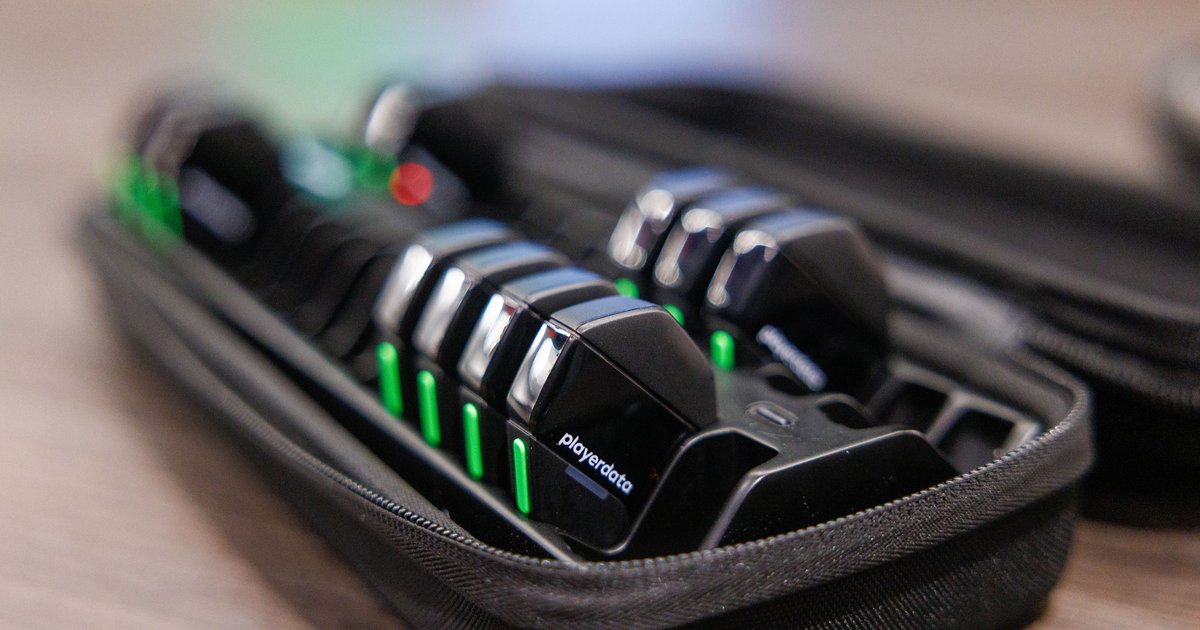
GPS tracking gives high school football coaches and strength staff the information to manage that load proactively — before injuries happen, not after.
The Load Management Problem in High School Football
Managing load in high school football is complicated by the size of rosters and the diversity of positional demands. A practice session that is appropriately demanding for a linebacker may be under-loading a wide receiver and overloading an offensive lineman simultaneously.
Without GPS data, strength coaches manage load for the team as a whole — applying the same general principles to every athlete regardless of position, individual physical status, or the cumulative load they are carrying from other sports or activities. That approach works at the average. It fails at the individual level, which is exactly where injuries occur.
GPS tracking makes individual load management practical even for a high school strength coach managing a roster of eighty or more athletes without a dedicated sport science team. The data surfaces the outliers automatically — the athletes carrying significantly more or less load than their position group — so coaches can focus their attention where it is most needed.
The 90% Rule: How the Best High School Football Programs Maintain Speed All Season
One of the most important and most overlooked applications of GPS tracking in high school football is speed maintenance.
Speed is a physical quality that degrades if it is not regularly trained at high intensities. Athletes who never reach above 85 to 90 percent of their maximum speed in practice will be slower in November than they were in September — at exactly the moment when speed matters most.
The best high school football strength coaches use GPS data to enforce a simple rule: every athlete reaches above 90 percent of their individual maximum speed at least two to three times every seven to ten days. The GPS data shows who is hitting that threshold in the natural flow of practice and who is not. Athletes who miss it get a dedicated sprint opportunity in a special teams period or conditioning segment.
"You want to be able to run fast when it's time to run fast," Molck said. "So you need to practice running fast to maintain that. If they're not able to hit it, then there's something going on. We need to get them in the training room and evaluate what is going on with them."
The GPS data doesn't just identify who is missing the threshold. It reveals when an athlete who normally hits it without difficulty suddenly cannot — a pattern that often precedes a soft tissue issue before any symptoms are visible.
Using Live Data to Protect Athletes Before Game Day
One of the most powerful applications of GPS tracking for high school football health management is the ability to see load accumulating in real time during practice — and act on it before it creates a problem.
High school football coaches have long known that practice load in the days before a game can affect performance on Friday night. What has been missing is the ability to quantify that load precisely enough to manage it intentionally.
Live GPS data changes that. A strength coach who can see that Wednesday's practice is approaching the same physical demand as last Friday's game can intervene — reducing volume in the final period, pulling back on high intensity work and protect athletes heading into game day. Without data, that decision is a gut call. With it, it is an informed one.
The Athlete App: How GPS Changes Football Culture in High School Programs
When athletes can see their own GPS data — their top speed, their distance — the culture around training changes in ways that instruction alone cannot produce.
Players who see that a teammate outworked them by every metric in the same practice session respond differently than players who receive the coaching staff's subjective assessment of the session. The data is objective. It cannot be argued with. And for high school athletes who are competitive by nature, the visibility of the data creates accountability that is self-sustaining.
The data also works in the other direction. A player who appears to be coasting in practice but is actually producing elite physical output by every GPS metric needs to be understood differently than a player who appears engaged but is doing less than the data shows. GPS data removes the subjective bias from that assessment.
Frequently Asked Questions
How does GPS tracking prevent injuries in high school football?
GPS tracking prevents injuries by making cumulative training load visible before it reaches a dangerous level. Coaches can monitor weekly load totals by position group, identify individual athletes who are spiking above their established baseline, and track whether athletes are maintaining the speed thresholds that signal physical readiness. The most significant benefit is catching load problems before they become injuries rather than responding after the fact.
What GPS metrics should high school football coaches track?
The most important GPS metrics for high school football relate to volume and intensity: total distance, high intensity running distance, sprint distance and count, top speed as a percentage of individual maximum, accelerations and decelerations, and workload score. Together these give coaches and strength staff a complete picture of what each athlete absorbed in a session and how that compares to their baseline and to game demands.
How does GPS data help high school football players get recruited?
College football programs at every level are increasingly interested in the physical profile of recruits. Speed, high intensity running capacity, and workload tolerance documented through GPS data give recruits objective evidence of their physical capabilities that film alone cannot provide. High school players with documented GPS profiles have a concrete advantage in recruitment conversations.
If you are evaluating GPS tracking for your high school football program and want to understand what a complete load management system looks like for your team, we would love to connect. Learn more about PlayerData for football.
See what GPS data can do for your football program
We'd love to show you what's possible with PlayerData.
Submit your information below to book a demo. We're ready when you are.

.png)