The most common reason high school soccer programs lose games in November is not tactics or talent. It's availability. The best team on paper loses to the team that kept their best players healthy.
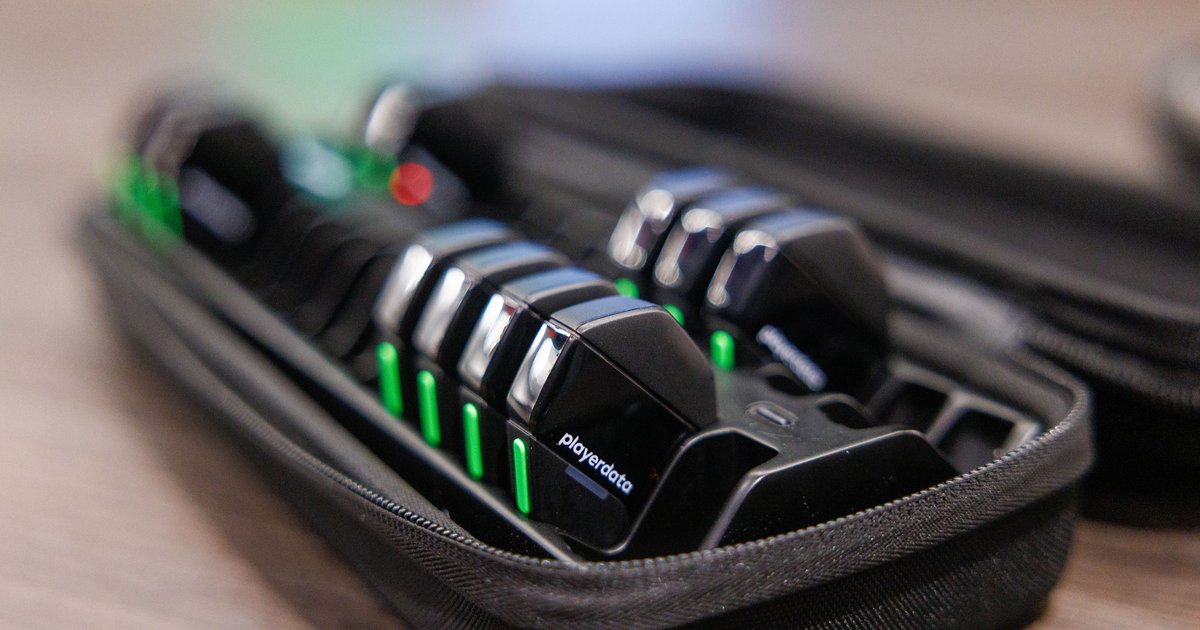
GPS tracking gives high school soccer coaches the information they need to manage player health proactively — before injuries happen, not after. This article explains how high school soccer coaches are using GPS data to keep players available throughout a long and demanding season.
The Load Management Problem in High School Soccer
High school soccer seasons are physically demanding in ways that are easy to underestimate. Most non-contact injuries in soccer are not random. They're the predictable result of physical load that exceeded what the athlete's body was prepared to absorb. The hamstring strain in the fourth quarter of a playoff game is usually traceable to a training week — or several training weeks — where load was not managed carefully.
Without GPS data, high school coaches manage load entirely by feel. How hard did practice seem? Did players look tired? Did anyone complain of soreness? These are useful signals but they have a significant ceiling. Athletes often mask fatigue. Practice can feel lighter than the numbers show it was. And the cumulative load that precedes a soft tissue injury accumulates invisibly until it is too late.
GPS data makes that accumulation visible.
How High School Soccer Coaches Use GPS Data to Prevent Injuries
The most practical application of GPS tracking for injury prevention in high school soccer is monitoring two things: weekly load totals and load spikes.
Weekly load totals tell a coach how much physical work each player has accumulated across the training week. By comparing this against each player's established baseline — what they typically absorb in a normal week — coaches can identify athletes who are carrying significantly more than usual and adjust their preparation accordingly before the weekend game.
Load spikes are the most significant injury risk factor in team sports. An athlete who has been doing moderate volume for several weeks and then experiences a sudden jump — because of a tournament, a return from illness, or an unexpectedly hard practice week — is at elevated injury risk. GPS data makes that spike visible in real time, giving coaches the information to intervene before the injury occurs.
Position-Specific Load Management for High School Soccer
One of the most valuable things GPS tracking reveals in high school soccer is how differently positions experience the same practice.
A session that feels moderate in overall intensity may place very different demands on different players. A wide midfielder running channels in a full-field session may cover twice the high intensity distance of a central defender playing in the same session. Without GPS, every player gets the same generic preparation regardless of their physical reality. With GPS, coaches can prepare each position for what the game actually demands of them.
The Athlete App: How GPS Data Changes Player Culture in High School Soccer
One of the most underappreciated benefits of GPS tracking for high school soccer is what happens when players can see their own data.
When athletes receive their session data on their phone — their top speed, their distance, their workload score — they become invested in the numbers in ways that coaching conversations alone cannot produce. Players who can see that they covered more ground than their teammates feel pride in the effort. Players who can see that they underperformed their personal baseline in a sprint session have objective context for the feedback they receive from coaches.
“PlayerData is really helpful for improving your technical abilities. It's kind of me versus me, what you can do to improve your own game,” says Maya, a high school aged forward for SUSA FC.
This changes the culture around practice and conditioning in ways that are difficult to manufacture through instruction alone.
Frequently Asked Questions
How does GPS tracking help prevent injuries in high school soccer?
GPS tracking prevents injuries by making training load visible before it accumulates to a dangerous level. Coaches can monitor weekly load totals, identify spikes in individual player workload, and make evidence-based decisions about practice intensity and volume before soft tissue injuries occur.
What GPS metrics should high school soccer coaches track?
The most important GPS metrics for high school soccer coaches are total distance, high intensity running distance, sprint distance, accelerations and decelerations, and workload score. Together these give coaches a complete picture of what each player absorbed in a session and how that compares to their baseline and to game demands.
Can GPS tracking help high school soccer players with college recruitment?
Yes. GPS tracking gives high school soccer players objective data on their physical performance — speed, distance, high intensity output — that they can share in the college recruitment process. College programs increasingly evaluate recruits against physical benchmarks, and players who arrive with documented GPS data have a concrete advantage in those conversations.
Learn more about PlayerData for soccer.
See what GPS data can do for your soccer program
We'd love to show you what's possible with PlayerData.
Submit your information below to book a demo. We're ready when you are.
.png)