Choosing a GPS tracker for a club soccer program is an important investment. The right system improves how you develop players, manage health, and prepare athletes for the next level of competition. The wrong system creates administrative overhead that the coaching staff does not have time to manage and data that never gets used.
This article gives club soccer coaches and directors the questions to ask before committing to any GPS tracking system.
Question 1: How Do You Start a Session?
This is a question most clubs forget to ask, and one that reveals a lot about how a system will actually perform in daily use.
Some GPS systems require a dedicated laptop connected to a docking station before a session can begin. That means setting up hardware before every practice, carrying a laptop to every training venue, and adding time to the pre-session routine every single day.
With PlayerData, starting a session is one tap on your phone. Every unit activates simultaneously. No laptop. No dock. No setup beyond putting the vests on your athletes. For coaching staffs running multiple sessions per week without dedicated technical support, that difference compounds significantly across a full season.
The answer you're looking for: a single coach can start a session independently from a mobile phone in under thirty seconds.
Question 2: How Do You Sync the Data?
How data gets from the units to the coaching staff after a session is one of the most important workflow questions to ask any GPS provider.
Some systems require collecting every unit, loading them into a docking station, and waiting for a manual download to complete. In a club environment where sessions run back to back and coaching staff are managing transitions between groups, this process creates real friction — and the data often does not reach the coaching staff until well after the session has ended.
PlayerData syncs data over Bluetooth directly to the coaching staff's phone. One tap at the end of the session. The data is visible in the app within minutes, and because it lives in the cloud, it can be accessed from anywhere in the world by any authorized staff member. A director of coaching at home can view session data from a training session happening across the country in real time.
The answer you are looking for: automatic sync via a mobile device at the end of the session, with cloud-based access from any device without requiring physical collection of units.
Question 3: How Do You Transport the Units?
Portability is a practical constraint that gets overlooked in product demonstrations but matters enormously in daily use.
Some GPS systems require a large hardshell case to transport and charge units, the kind of case that needs to be checked on a flight, loaded into a van for away games, and managed as a separate piece of equipment. That creates a logistical burden for club programs where coaches are responsible for their own equipment across different venues.
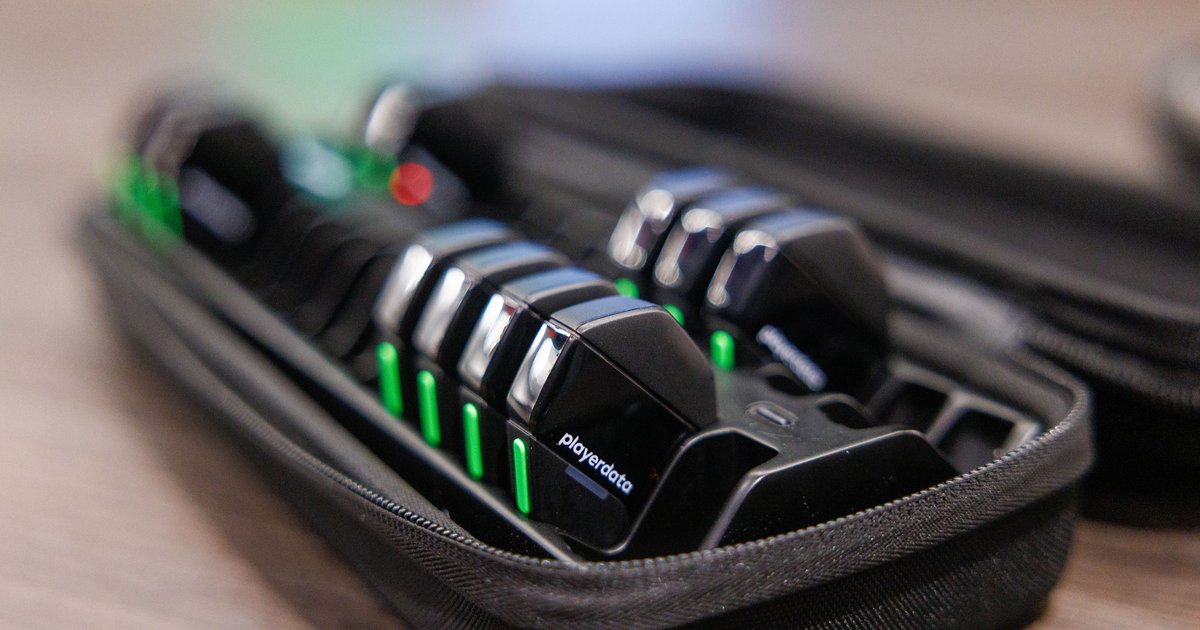
PlayerData's carrying and charging case holds thirty units and fits easily in a backpack. The same bag that carries your training equipment carries your GPS system. For clubs managing cameras across multiple teams or traveling to tournaments, that portability changes what is practical.
The answer you are looking for: a carrying and charging case compact enough for a single coach to transport without additional equipment.
Question 4: Can Athletes Access Their Own Data?
Player buy-in is important. The solution is straightforward: give athletes access to their own data.
A GPS system with an athlete-facing mobile app turns data from something coaches look at into something athletes are invested in. Players who can see their speed, their distance, and their workload after every session engage with training differently than players who receive the information secondhand. The competitive culture that emerges when athletes can compare their numbers to teammates and track their own development over time is one of the most consistently cited benefits of GPS tracking by programs that have adopted it.
The answer you are looking for: athletes receive their session data automatically on their phone through a dedicated app after every session. No print outs.
Question 5: Does the System Scale Across Multiple Teams?
A GPS system that works well for one team may not work well for a club running ten teams across multiple age groups with a small administrative staff.
PlayerData's cloud-based workflow is designed specifically for this. Clubs with hundreds or even thousands of athletes like IMG Academy can run the system every day with limited staff — because session management, data sync, and access are all handled through the cloud without requiring centralized technical coordination. Each coach manages their own team independently while all data flows into a single platform that directors and performance staff can access across the entire organization.
The answer you are looking for: a cloud-based architecture that scales to multiple teams without creating an administrative burden proportional to the number of teams using the system.
Question 6: Does It Give You the Metrics That Actually Matter?
Not all GPS systems surface the same data. Ask specifically what metrics the platform provides and whether those metrics are meaningful for the decisions your coaching staff needs to make.
For club soccer, the metrics that matter most pertain to volume, intensity, and tactical positioning. Total distance, high intensity running distance, sprint distance and count, accelerations and decelerations, top speed, heat maps, tactical playback.
PlayerData surfaces all of these, and backs them up with CoachMate AI, an embedded artificial intelligence assistant in the platform that gives coaches instant reports, plain-language recommendations, and help interpreting the data without needing a sport science background. Ask your coach what your center midfielders covered at high intensity this week, CoachMate answers immediately.
The answer you are looking for: a platform that surfaces the metrics relevant to load management and player development, with support infrastructure that helps coaching staff act on the data rather than just store it.
Question 7: Is the Data Independently Validated?
For club programs using GPS data in player development decisions or recruitment contexts, the accuracy of the data matters. Ask specifically whether the system's accuracy has been independently validated and against what standard.
FIFA Quality certification for player tracking is the most recognized accuracy standard in soccer and requires third-party testing against defined accuracy thresholds. PlayerData is a FIFA Preferred Provider for Player Tracking, independently validated to meet professional accuracy standards.
The answer you are looking for: independent third-party validation of GPS accuracy, not manufacturer self-reporting. FIFA Preferred and FIFA Quality designations are the highest levels of validation for player tracking devices.
Frequently Asked Questions
What should a club soccer program look for in a GPS tracker?
The most important criteria are workflow simplicity — how sessions are started, how data is synced, and how units are transported — alongside athlete app access, cloud-based scalability across multiple teams, meaningful metrics with support to interpret them, and independently validated accuracy. The system your coaching staff will actually use every day is more valuable than the most feature-rich system they will not.
How accurate are GPS trackers for club soccer?
GPS tracker accuracy varies by provider. The most reliable benchmark is independent third-party validation. FIFA Quality certification for player tracking is the recognized accuracy standard in professional soccer. When evaluating any GPS system, ask for documentation of independent accuracy testing rather than relying on manufacturer claims alone.
Do GPS trackers for club soccer work indoors?
Not all GPS trackers work indoors. Traditional GPS requires satellite signals that do not penetrate indoor facilities. The best systems for indoor and outdoor use will come with IMU technology — inertial measurement unit tracking — to capture speed and distance estimates indoors without satellite access. Confirm indoor capability before purchasing if your program uses indoor training facilities at any point in the year.
If you are evaluating GPS trackers for your club soccer program and want to ask these questions directly to a team that knows the product, we would love to connect. Learn more about PlayerData for soccer.
See what GPS data can do for your soccer program
We'd love to show you what's possible with PlayerData.
Submit your information below to book a demo. We're ready when you are.
.png)