Portland Hearts of Pine Is Building Something Bigger Than Soccer

USL League One achieves unprecedented success with commitment to quality and consistency

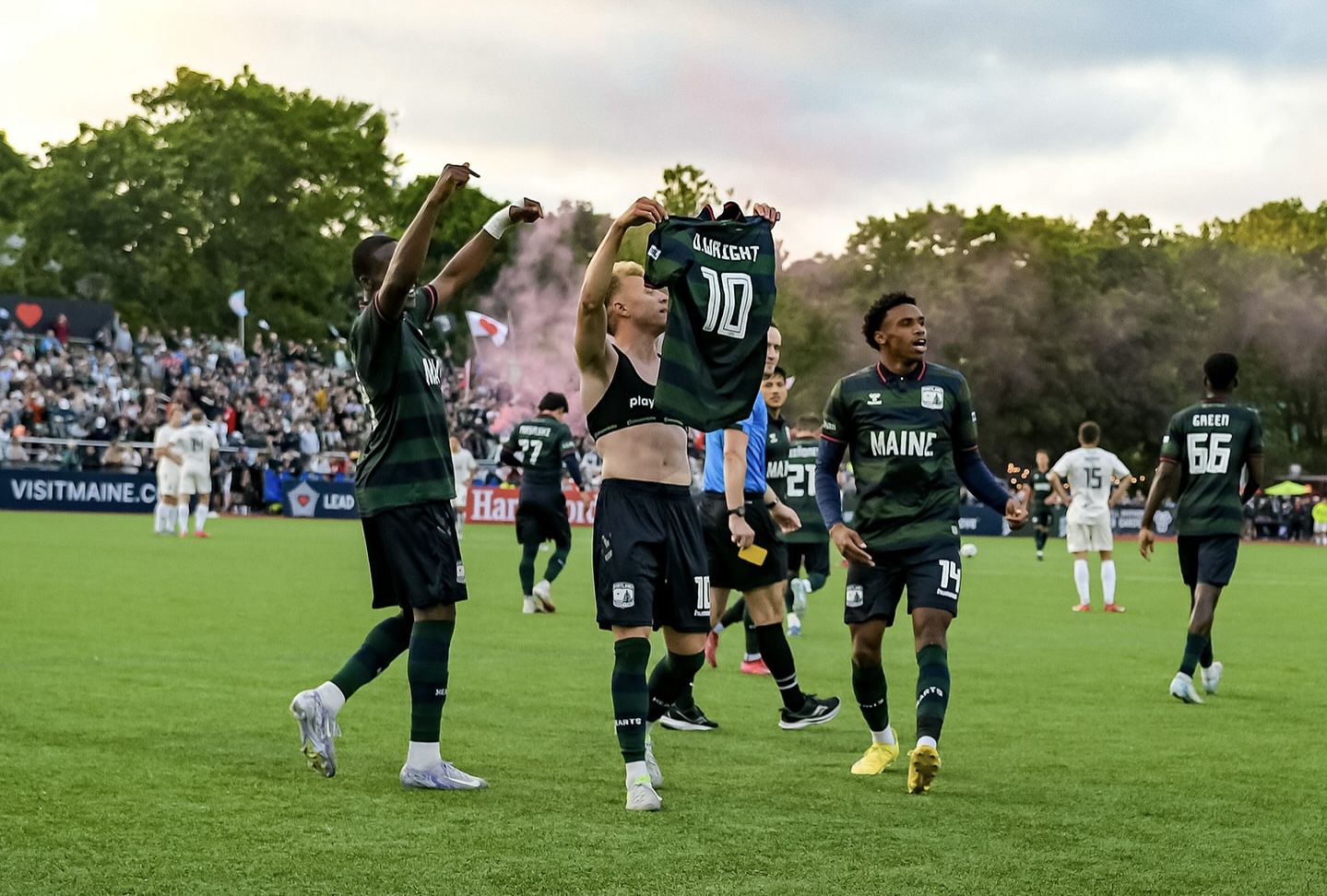
At its best, sport is one of the few things left that can still stop a city in its tracks. It creates belonging where there wasn't any. It gives a community something to gather around, something to believe in, something to feel together. Game results matter, but what lasts is the feeling in the stadium, the chant that starts in the streets while fans file into a stadium, the person who may live halfway across the world but feel at home every time their team drops a new kit design.

That feeling is what's driving one of the most exciting movements in North American sports right now. 

In the nooks and crannies of Americana, soccer is exploding. Small market, community-rooted clubs are becoming cultural institutions faster than anyone predicted. You can feel it in Pawtucket, Rhode Island at a Rhode Island FC match. In Burlington, Vermont with the Vermont Green. And most powerfully perhaps, in Portland, Maine where USL League One newcomers Hearts of Pine have quietly built one of the most compelling brands in all of sport.

Portland Hearts of Pine might be the best case study you’ll come across on what happens when a sports organization gets it right from the start. In Portland, the community isn't a marketing strategy, it's the purpose. 

"The fan support from day one, I was like, 'oh wow,' this is going to be supported incredibly well," said Finn Ducker, the club's strength and conditioning coach. "The movement of the people was unbelievable."

That energy reflects the club's founding vision, one that was never narrowly about soccer. "The whole thing is, how can we get this vehicle for amazing community growth and impact?" Ducker explains. "The vehicle just happens to be soccer."

Portland Hearts of Pine works across all segments of the Maine community, youth development, underserved populations, general programming, and recently announced a USLW women's team launching next summer. The support, Ducker says, is already there. "The support for the women is already huge and they're at the amateur level. The community aspect here is bigger than the sport."
Click here to learn more about PlayerData Soccer

The Standard on the Pitch Has to Match the Standard Off It

When a club carries that kind of weight, a unique sort of expectation follows. With a community who is thoroughly bought in, the work behind the scenes has to be just as intentional. 

For Ducker, that means establishing and maintaining high standards in both training methods and technology. The tools they use need to suit the realities of a USL League One staff, the demands of their season, and need to answer an important question the coaches are asking. 

"The questions specifically from my coaches are: Finn, what are the numbers? Coaches ask questions and the data provides context, and then we can find answers." His philosophy on technology is equally direct: "Don't just get it to get it. Technology use in sports science is more geared toward trying to find solutions to problems that you're facing."

In soccer, maximum sprint efforts aren’t just a performance metric — they’re a hamstring health protocol. The science is clear: hamstrings that are regularly exposed to high-speed running are more resilient. Tendons and muscles adapt to the demands placed on them. A player who consistently hits top speeds in training is a player whose hamstrings are conditioned for the moments in a match when full-speed sprints happen without warning. Skipping those efforts doesn’t protect the hamstring, it leaves it underprepared.

With PlayerData, Ducker can see sprint data as it happens and intervene in the moment. “We’ve had practice where we didn’t hit it live in the moment when we were trying to, so I went into the drill and stood near the player. When he was resting I said: hey, give yourself a bit more distance to do this recovery run and just focus on sprinting as fast as you can.”

That kind of in-session adjustment, done consistently, separates a well-dosed training week from one that looks fine on paper but leaves players underprepared. “Now that’s basically every single week all season, we’ve been able to do that really successfully and reliably because of that live GPS capability.”

Two Years In, Still Delivering

Portland Hearts of Pine has now been a PlayerData club for two full seasons. They evaluated GPS options at the onset, made a deliberate choice, and kept choosing it. For Ducker, the consistency of the data session after session, road trip after road trip is what makes it worth keeping. Two years of reliable answers is proof enough.

The operational simplicity helps too. Portland Hearts of Pine travels commercially across a league that spans the entire country, small market to small market, sometimes routing through Nashville just to hop on a bus to reach Chattanooga. Gear has to be light, simple, and TSA-friendly.

“I can just carry it through security. You can carry it on and it’s not any sort of issue.” For a staff running lean and moving constantly, that’s a major piece of the system being sustainable across a full season.

A Club Worth Watching

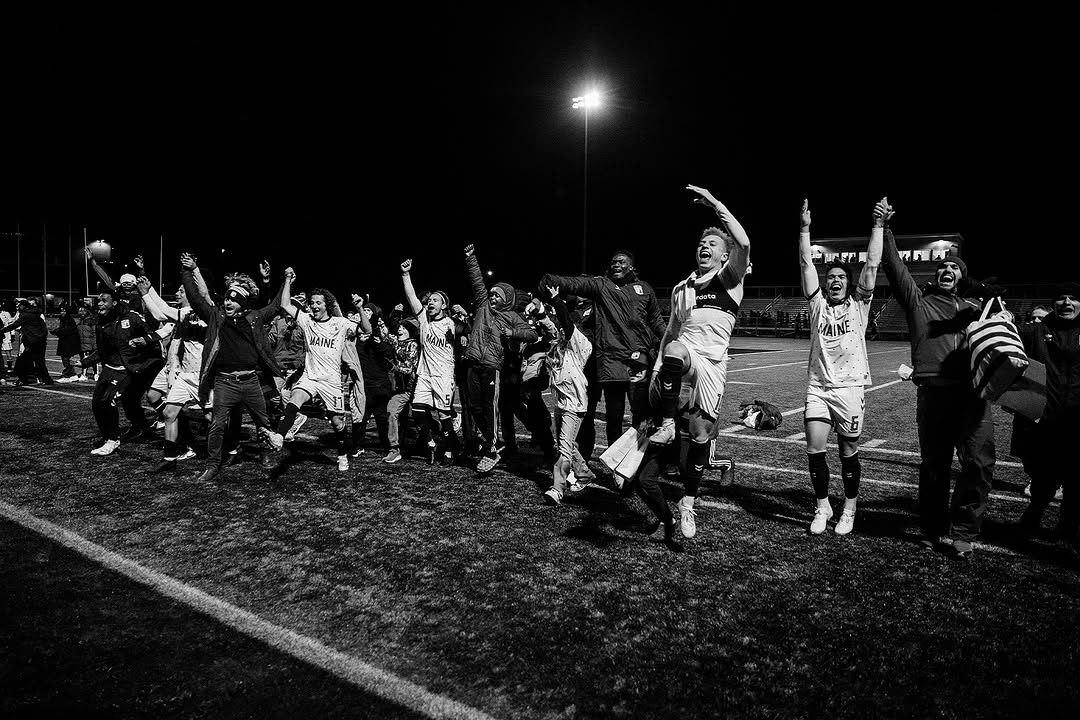
Portland Hearts of Pine continues to be one of the hottest tickets in the northeast. They have sold out every home match they’ve had. And in 2027, they will begin construction on a new stadium and launch their USLW women’s team, an amateur bridge for high-level college players and international players with eyes on the professional women’s game. 

In today’s world, the stakes are high even at this level of professional sport. And the rewards of doing things right can be significant. 

Invest in your players and your community, it will pay off. 

That’s the Portland Hearts of Pine story. A club that showed up for its community, and found a community that showed up right back. Ducker puts it simply: “I feel really lucky and fortunate to be on the inside of it.”

PlayerData is proud to be part of what they’re building.

‍

‍

Ready to see what PlayerData can do for your club?

Whether you're building out an academy, managing a first team, or looking for a platform that serves every level of your organisation, we'd love to show you what's possible.

Submit your information below to book a demo. We're ready when you are.

‍

‍

‍

‍

Portland Hearts of Pine Is Building Something Bigger Than Soccer

October 15, 2026
October 16, 2026
GPS for soccer

At its best, sport is one of the few things left that can still stop a city in its tracks. It creates belonging where there wasn't any. It gives a community something to gather around, something to believe in, something to feel together. Game results matter, but what lasts is the feeling in the stadium, the chant that starts in the streets while fans file into a stadium, the person who may live halfway across the world but feel at home every time their team drops a new kit design.

That feeling is what's driving one of the most exciting movements in North American sports right now. 

In the nooks and crannies of Americana, soccer is exploding. Small market, community-rooted clubs are becoming cultural institutions faster than anyone predicted. You can feel it in Pawtucket, Rhode Island at a Rhode Island FC match. In Burlington, Vermont with the Vermont Green. And most powerfully perhaps, in Portland, Maine where USL League One newcomers Hearts of Pine have quietly built one of the most compelling brands in all of sport.

Portland Hearts of Pine might be the best case study you’ll come across on what happens when a sports organization gets it right from the start. In Portland, the community isn't a marketing strategy, it's the purpose. 

"The fan support from day one, I was like, 'oh wow,' this is going to be supported incredibly well," said Finn Ducker, the club's strength and conditioning coach. "The movement of the people was unbelievable."

That energy reflects the club's founding vision, one that was never narrowly about soccer. "The whole thing is, how can we get this vehicle for amazing community growth and impact?" Ducker explains. "The vehicle just happens to be soccer."

Portland Hearts of Pine works across all segments of the Maine community, youth development, underserved populations, general programming, and recently announced a USLW women's team launching next summer. The support, Ducker says, is already there. "The support for the women is already huge and they're at the amateur level. The community aspect here is bigger than the sport."

Click here to learn more about PlayerData Soccer

The Standard on the Pitch Has to Match the Standard Off It

When a club carries that kind of weight, a unique sort of expectation follows. With a community who is thoroughly bought in, the work behind the scenes has to be just as intentional. 

For Ducker, that means establishing and maintaining high standards in both training methods and technology. The tools they use need to suit the realities of a USL League One staff, the demands of their season, and need to answer an important question the coaches are asking. 

"The questions specifically from my coaches are: Finn, what are the numbers? Coaches ask questions and the data provides context, and then we can find answers." His philosophy on technology is equally direct: "Don't just get it to get it. Technology use in sports science is more geared toward trying to find solutions to problems that you're facing."

In soccer, maximum sprint efforts aren’t just a performance metric — they’re a hamstring health protocol. The science is clear: hamstrings that are regularly exposed to high-speed running are more resilient. Tendons and muscles adapt to the demands placed on them. A player who consistently hits top speeds in training is a player whose hamstrings are conditioned for the moments in a match when full-speed sprints happen without warning. Skipping those efforts doesn’t protect the hamstring, it leaves it underprepared.

With PlayerData, Ducker can see sprint data as it happens and intervene in the moment. “We’ve had practice where we didn’t hit it live in the moment when we were trying to, so I went into the drill and stood near the player. When he was resting I said: hey, give yourself a bit more distance to do this recovery run and just focus on sprinting as fast as you can.”

That kind of in-session adjustment, done consistently, separates a well-dosed training week from one that looks fine on paper but leaves players underprepared. “Now that’s basically every single week all season, we’ve been able to do that really successfully and reliably because of that live GPS capability.”

Two Years In, Still Delivering

Portland Hearts of Pine has now been a PlayerData club for two full seasons. They evaluated GPS options at the onset, made a deliberate choice, and kept choosing it. For Ducker, the consistency of the data session after session, road trip after road trip is what makes it worth keeping. Two years of reliable answers is proof enough.

The operational simplicity helps too. Portland Hearts of Pine travels commercially across a league that spans the entire country, small market to small market, sometimes routing through Nashville just to hop on a bus to reach Chattanooga. Gear has to be light, simple, and TSA-friendly.

“I can just carry it through security. You can carry it on and it’s not any sort of issue.” For a staff running lean and moving constantly, that’s a major piece of the system being sustainable across a full season.

A Club Worth Watching

Portland Hearts of Pine continues to be one of the hottest tickets in the northeast. They have sold out every home match they’ve had. And in 2027, they will begin construction on a new stadium and launch their USLW women’s team, an amateur bridge for high-level college players and international players with eyes on the professional women’s game. 

In today’s world, the stakes are high even at this level of professional sport. And the rewards of doing things right can be significant. 

Invest in your players and your community, it will pay off. 

That’s the Portland Hearts of Pine story. A club that showed up for its community, and found a community that showed up right back. Ducker puts it simply: “I feel really lucky and fortunate to be on the inside of it.”

PlayerData is proud to be part of what they’re building.

‍

‍

Ready to see what PlayerData can do for your club?

Whether you're building out an academy, managing a first team, or looking for a platform that serves every level of your organisation, we'd love to show you what's possible.

Submit your information below to book a demo. We're ready when you are.

‍

‍

‍

‍