

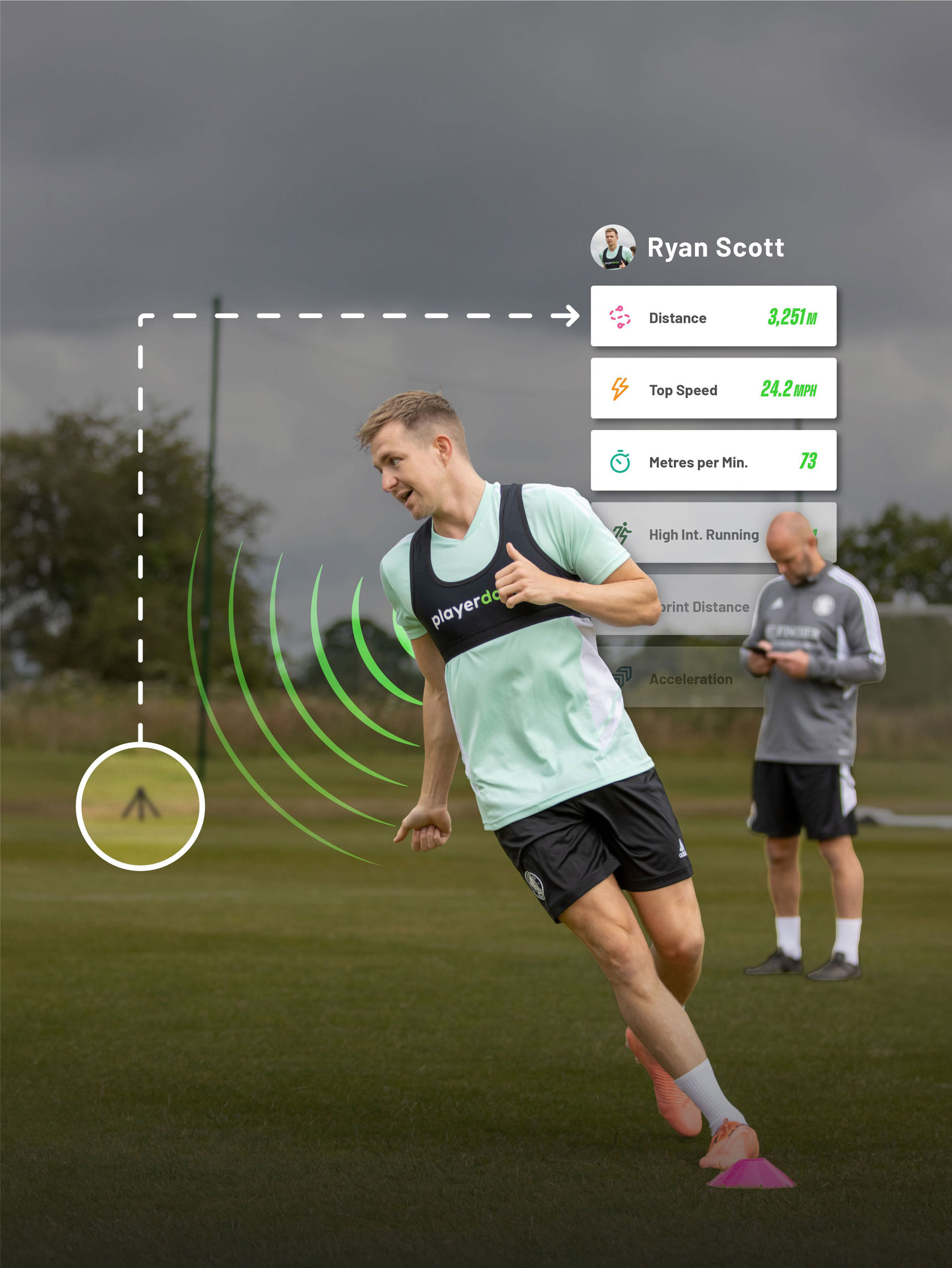
When a coach can see actual speed data while running a drill, training decisions stop being guesswork.
Instead of asking 'does that look fast enough,' a coach can see exactly what percentage of maximum speed each player is hitting on every rep. Instead of estimating whether a group is fatigued or sandbagging, the data shows it directly.
This matters most in sessions built around intensity targets. If a drill is designed to elicit 85 percent of maximum speed and players are running at 70, the set isn’t doing what the coach intended. Without live data, a coach finishes the drill, downloads the session that night, and finds out the next morning. With live data, the coach adjusts the drill in the moment before the opportunity is gone.
Percentage of Maximum Speed: A Useful Number on the Field
Raw speed numbers are difficult to use in real time. Knowing a player hit 6.2 meters per second tells you something, but it doesn’t tell you much without context.
Percentage of maximum speed solves this. When a system has established a player's top speed, every subsequent effort is measured against that benchmark. A player running at 90 percent of max is working hard. The same player running at 55 percent during a drill designed for high intensity is not.
This gives coaches a universal reference point across a full squad, useful for comparing players of different sizes and abilities, and for communicating intensity expectations in terms every player on the roster understands.
Marrying Practice Intent and Practice Outcome
Every coach has designed a session with a specific physiological intent. High intensity. Medium. Or recovery. The intent is built into the drill structure, the work-to-rest ratios, and the volume.
But practice intent and practice outcome are not the same thing. Players self-regulate. Fatigue sets in earlier or later than expected. Competition structure produces different effort levels than anticipated.
Post-session data shows you what happened. Live data lets you manage what is happening in real time. Both matter. But the ability to intervene during practice — to shorten a rest period, extend a set, increase the competition stakes, top off a player at the end of training — requires data that exists before the session ends.
How Live Data Changes Coaching Communication
Live speed data also changes how coaches communicate with players during practice. Rather than 'you need to work harder,' a coach can say 'you’re at 68 percent, this drill requires 80+.' The conversation becomes specific. The standard is objective. And players cannot argue with a number they can see on a screen.
This is particularly valuable in group settings where effort varies across the squad. Coaches can identify which players are holding back, which are exceeding intensity targets and may be at risk of over-reaching, and which are working exactly where they should be, all during the session, not hours later.
What to Look for in a Live Data System
Not all GPS systems offer genuine live data. Some offer a refresh rate that delays data by several minutes, which limits its usefulness for in-session decisions. When evaluating any tracking system for live data capability:
- Ask what the refresh rate is for live speed data.
- Ask what the coaching staff view looks like during a session, a phone or tablet app is more practical than a hardwired laptop.
- Ask whether live data includes individual player speeds or only squad averages.
Frequently Asked Questions
What is live GPS data in sports?
Live GPS data refers to volume and intensity metrics like player speed, distance, accelerations, and decelerations that are visible to coaches in real time during practice or competition. Coaches can see current speed, intensity, and load on a phone or tablet while the session is in progress.
Why is real-time speed data useful during practice?
Real-time speed data allows coaches to make decisions during a session rather than after it. If a drill is designed to hit a specific intensity target and players are not reaching it, coaches can adjust. Live data allows coaches to influence what is happening as it’s happening.
What does percentage of maximum speed mean in GPS tracking?
Percentage of maximum speed expresses a player's current speed as a percentage of their established personal best. It gives coaches a reference point that accounts for individual differences. A player running at 90 percent of their max speed is working hard regardless of their absolute speed. This makes it easier to set and communicate intensity targets across an entire squad based on individual abilities.
Can GPS trackers show live data on a phone?
GPS systems like PlayerData offer mobile-accessible live data, while others require a laptop or proprietary display. For most coaching environments, phone-based live data is the most practical format. Ask vendors specifically whether live data is accessible on a standard smartphone and what the refresh rate is.
How does live GPS data improve training quality?
Live GPS data aligns practice intent and practice outcome. Coaches can confirm that players are hitting target intensities, identify individuals who are working below or above the intended zone, and adjust session variables in real time. Over time, this produces more consistent training stimuli and better session-to-session quality.
See what player tracking can do for your program
We'd love to show you what's possible with PlayerData.
Submit your information below to book a demo. We're ready when you are.


.png)