

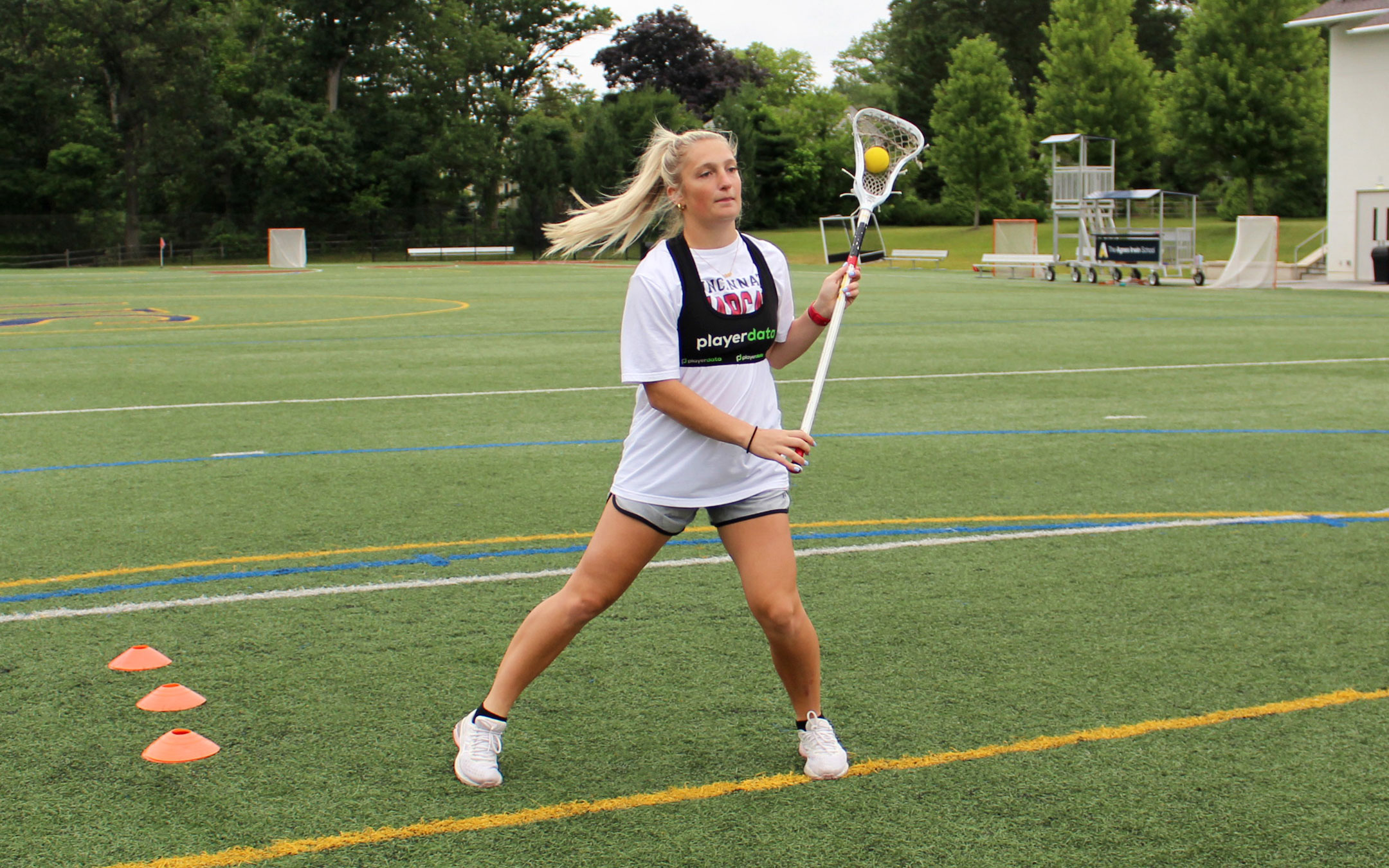
Lacrosse deserves GPS data. The sport's physical demands, sustained high-intensity bursts, explosive direction changes, contact load, and the neuromuscular cost of stick skills under fatigue, produce complex, position-specific load profiles that GPS tracking was built to reveal.
Coaches who have brought GPS tracking into their programs are finding that lacrosse is one of the sports where the data is most meaningful.
What GPS Reveals in Lacrosse
Lacrosse produces a rich load profile that looks different across every position on the roster. An attackman who has covered four miles in a game may have done more high-speed work than a midfielder who covered five. GPS tracking gives coaches the ability to see that distinction — not distance alone, but what kind of distance, at what speed, with what intensity of effort.
That specificity is what makes GPS so well-suited for lacrosse. The data matches the complexity of the sport.
Position-Specific Demands Coaches Are Now Measuring
One of the most valuable applications of GPS in lacrosse is building a position-specific load model. Midfielders, attackmen, and defenders run different games, and GPS gives coaches a way to evaluate each position against benchmarks that reflect what that position actually demands.
Midfielders cover the most ground and log the highest total distances. The most meaningful number for this position is high-speed running volume — how much of that distance is covered at an intensity that challenges both the aerobic and anaerobic systems.
Attackmen operate in tighter spaces. Their load profile is built around short accelerations, hard decelerations, and direction changes. Player load per minute — a composite of acceleration, deceleration, and change of direction — captures what attackmen experience more accurately than total distance.
Defenders mirror opposing attackmen and absorb contact load on top. Tracking session load trends for defensive players helps coaches recognize when a player is carrying more physical stress than their current training base has prepared them for, and act on it before it becomes a problem.
Managing Load Across a Lacrosse Season
Lacrosse seasons are long and physically cumulative, and GPS gives coaches a tool that is built for that challenge. When coaches establish a baseline training load for each player, the data starts telling a story, one that shows up before a player ever says they are tired.
A meaningful drop in load, even when a player looks fine on the surface, often signals fatigue or recovery demands that will show up in performance within the next week or two. Coaches with access to that signal can adjust volume and intensity ahead of the problem, keeping players healthier and more available deep into the season.
Using GPS to Evaluate Practice Quality
GPS data gives lacrosse coaches an objective read on whether practice did what the plan required.
A drill designed to build repeated sprint capacity should produce a specific intensity profile. When the data confirms players are hitting that target, coaches know the session is working. When the numbers point to an opportunity — to push harder, extend a set, or add competition pressure — coaches can act on it with confidence rather than estimation.
That feedback loop compounds over a season. Coaches learn what produces the right physical stimulus for their specific group, and practice design gets sharper with every session.
What to Look for in a GPS System for Lacrosse
A few features matter most for lacrosse programs:
Acceleration and deceleration counts. The volume of explosive short efforts is one of the primary drivers of lacrosse load. A system that captures these alongside top-end speed gives coaches a complete picture of what each session demanded.
Durability in variable conditions. Lacrosse is played on grass and turf through spring and fall weather. Devices need to perform consistently in cold, wet, and variable environments. And they need to be comfortable to wear.
A workflow built for coaching staff. Most lacrosse programs operate without a dedicated performance analyst. The right system surfaces clear, actionable output without requiring hours of interpretation after practice.
Roster-scale reporting. Lacrosse rosters run 30-plus players. A system that scales across a full roster without adding friction to the review process makes consistent use easy.
LEARN MORE ABOUT PLAYERDATA’S LACROSSE GPS PRODUCT HERE
Frequently Asked Questions
How do you manage lacrosse player load during a long season?
GPS tracking allows coaches to establish a baseline training load for each player and monitor how that baseline shifts across the season. Early changes in load — even before a player reports feeling fatigued — often signal what is coming. Coaches use that data to adjust practice intensity and volume ahead of the problem rather than in response to it.
Is GPS tracking useful for lacrosse midfielders versus attackmen?
Yes. Midfielders and attackmen have distinct load profiles. Midfielders log higher total distances and sustained high-speed running. Attackmen accumulate more short explosive efforts and sharp direction changes in tighter spaces. GPS allows coaches to evaluate each position against benchmarks that reflect what that position actually demands — not a one-size-fits-all average.
Can GPS data improve lacrosse practice quality?
Yes. GPS data lets coaches confirm whether a drill is producing the intended physical stimulus. When players are hitting intensity targets, coaches know the session is on track. When the data points to an opportunity to adjust, coaches can change rest periods, rep counts, or competition structure with confidence — during the session or going into the next one.
How many GPS devices does a lacrosse program need?
Most programs start by tracking their full field roster and build from there. A system that scales across 30-plus players without steep incremental costs per unit is more practical for most lacrosse programs than one priced for a smaller team.
Can you track lacrosse GPS data live?
Yes. GPS tracking systems like PlayerData have live data capabilities that display player speed, effort, and load in real time during practice or competition — visible on a phone or tablet while the session is in progress. For lacrosse coaches, this means seeing which players are hitting intensity targets on a sprint drill, who is fading mid-session, and where load is accumulating across the roster before the final whistle. Live data lets coaches act on what is happening in real time.
See what player tracking can do for your lacrosse program
We'd love to show you what's possible with PlayerData.
Submit your information below to book a demo. We're ready when you are.


.png)