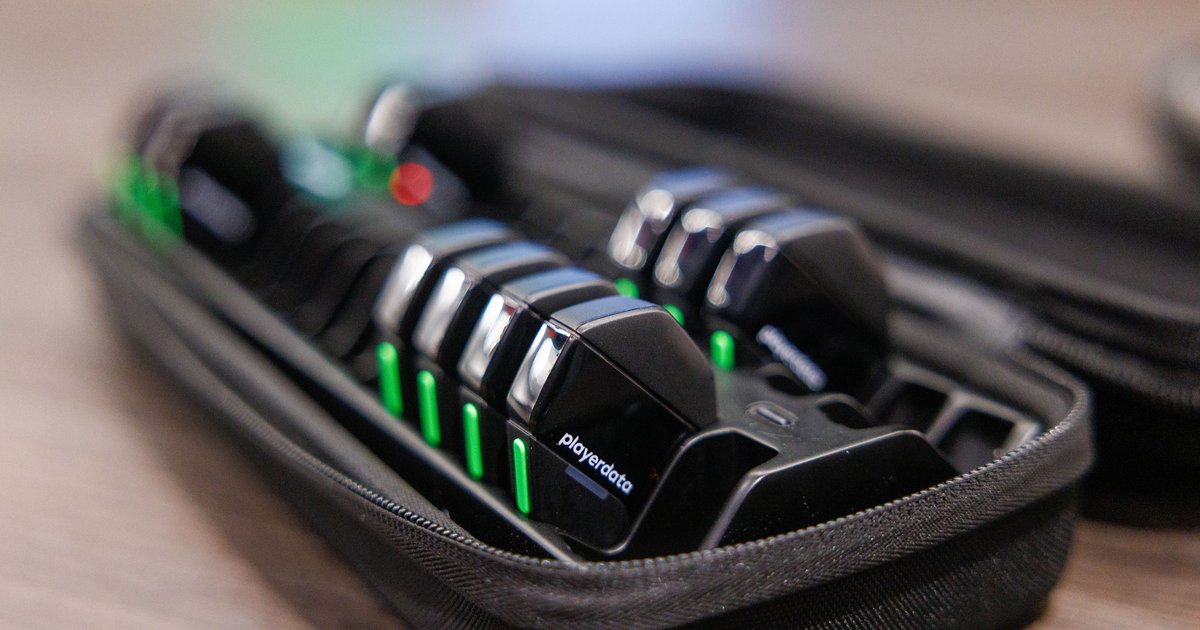
If cameras can now extract performance data automatically, why do the best teams in the world still put wearable vests on their players?
The answer is instructive for any club making a technology decision.
Cameras Capture What Happens on the Ball. GPS Captures Everything.
Video is an outstanding tool for tactical analysis. Watching footage of how a team defends set pieces, how they build from the back, or how they press in the final third provides information that no other medium can replicate.
What most mass-market video providers cannot capture is the physical reality underneath those tactical patterns. How fast was the center back moving when he made that recovery run? What was the sprint count for the left midfielder across the ninety minutes? Which players are carrying elevated load heading into a congested fixture week?
GPS wearables capture all of that. Cameras do not.
The Training Data Gap
A camera-derived analytics system typically only generates data when a camera is recording a match. Training sessions, the environment where athletes spend the overwhelming majority of their time, produce no data whatsoever.
This creates a fundamental problem for any club trying to manage player health across a season. The load that accumulates in training is the load that most commonly precedes injury. Without visibility into training load, a club is managing athlete health in the dark regardless of how sophisticated their match day camera setup is.
Individual Athlete Profiles Require Longitudinal Data
Player development is not measured in single games. It's measured across sessions, weeks, months, and seasons. Understanding whether a player is getting faster, building fitness capacity, or approaching a load threshold that elevates injury risk requires a continuous data record from every session — not a game-by-game snapshot.
GPS wearables build that profile from day one. Every training session, every game, every conditioning block contributes to a longitudinal record that makes individual development visible over time.
Camera systems that only capture match data cannot build this profile. They can tell you what a player did on Saturday. They cannot tell you what that performance means in the context of what the player did Monday through Friday.
What This Means for Your Club
The clubs that get the most out of their performance technology are the ones that can connect training data to game data, individual development to team preparation, and daily load management to season-long availability.
That connection requires wearable GPS as the foundation. Camera analytics can sit on top of that foundation and add value. They cannot replace it.
Frequently Asked Questions
Why do professional soccer teams still wear GPS vests when cameras can track players?
Because wearable GPS data is more accurate, covers training as well as matches, and provides the continuous longitudinal record that load management and injury prevention require. Camera systems are valuable for video analysis but cannot replicate what wearable GPS does for physical performance monitoring.
Does GPS tracking work in training as well as matches?
Yes. GPS wearables track every session — training, conditioning, and matches — producing a continuous physical record across the full week.
Can a soccer club use both cameras and GPS trackers?
Yes, and the best programs do. Cameras serve the video analysis and tactical review use case. GPS wearables serve the physical load monitoring, injury prevention, and athlete development use case. They are complementary tools rather than alternatives.
If you're evaluating GPS or camera options for your soccer club and want to understand what the right combination looks like for your program, we would love to help.
See what GPS data can do for your soccer club
We'd love to show you what's possible with PlayerData.
Submit your information below to book a demo. We're ready when you are.
.png)