How US Soccer Is Raising the Bar Across Every National Team

US Soccer is using PlayerData from its men's and women's senior teams all the way through nine of its Extended National Teams.

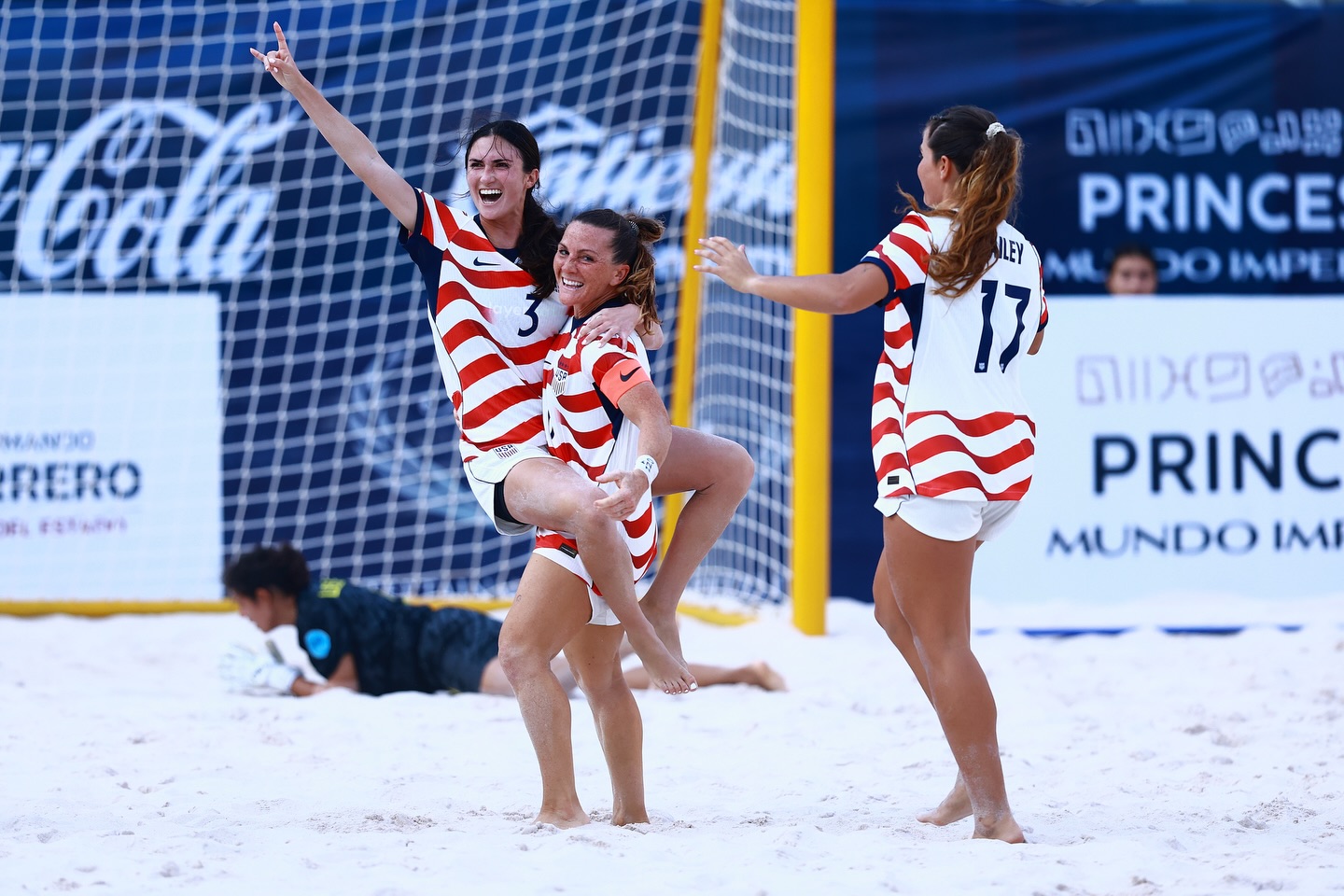
The U.S. Soccer Federation fields more national teams than most people realize, more in fact, than any other federation in the world. Beyond the senior men's and women's programs that command global attention, there are nine extended national teams: men's and women's rosters for beach soccer, cerebral palsy, deaf soccer, and futsal, as well as a co-ed power chair soccer team. Each one carries the crest. Each one now operates with the same technology as the federation's most visible programs.

The recent opening of the Arthur M. Blank U.S. Soccer National Training Center marks a significant step forward for the entire federation. For the first time, the Extended National Teams have a permanent home. A fully equipped facility with grass fields, beach soccer pitches, an indoor futsal and power soccer court, and a high performance gym. PlayerData is part of that infrastructure across every team.

"It’s exciting that we have access to incredible resources like PlayerData," says Daniel Wartner, sport scientist for the Extended National Teams. "Looking back at where we started, it's been pretty remarkable to see the growth."

The practical results have quickly followed. Wartner identified sport-specific speed thresholds for beach soccer grounded in published literature, accounting for the physical demands of playing in the sand. Custom thresholds for the CP (cerebral palsy) team give the staff a meaningful way to monitor players who would not be well served by standardized benchmarks. Live data has led to in-session decisions that prepared players heading into critical matches.

Nick McKellar, who also provides performance support to the Extended National Teams, saw the impact firsthand when the U.S. Men's Deaf National Team recently achieved the best result in program history with full roster availability across every game of a major international tournament.

"As the tournament went on, other teams were dropping key players," McKellar says. "We had 100% availability. That's something we’re really proud of." This outcome resulted in a team best-ever fourth-place finish." 

The work is still in its early stages. The Extended National Teams program is building a standardized drill library that maps session types against physical metrics, creating a shared resource any coach across any team can access. Talent identification camps are also now being run at the National Training Center in Atlanta for the first time, which means performance data can be collected on prospective players in the same environment where the national teams train.

"There are a lot of undiscovered players out there," Wartner says. "We're having to branch out and find them in very different environments. Now that we have the national training center, we can get units on them and compare what we're seeing to what our teams look like."

The goal is clear. A federation serious about becoming a global power in the sport, not just for the teams the world already watches, but for every player who puts on the crest.

Ready to see what PlayerData can do for your club?

Whether you're building out an academy, managing a federation, or looking for a platform that serves every level of your organization, we'd love to show you what's possible.

Submit your information below to book a demo. We're ready when you are.
How US Soccer Is Raising the Bar Across Every National Team

July 13, 2026
US Soccer GPS

The U.S. Soccer Federation fields more national teams than most people realize, more in fact, than any other federation in the world. Beyond the senior men's and women's programs that command global attention, there are nine extended national teams: men's and women's rosters for beach soccer, cerebral palsy, deaf soccer, and futsal, as well as a co-ed power chair soccer team. Each one carries the crest. Each one now operates with the same technology as the federation's most visible programs.

The recent opening of the Arthur M. Blank U.S. Soccer National Training Center marks a significant step forward for the entire federation. For the first time, the Extended National Teams have a permanent home. A fully equipped facility with grass fields, beach soccer pitches, an indoor futsal and power soccer court, and a high performance gym. PlayerData is part of that infrastructure across every team.

"It’s exciting that we have access to incredible resources like PlayerData," says Daniel Wartner, sport scientist for the Extended National Teams. "Looking back at where we started, it's been pretty remarkable to see the growth."

The practical results have quickly followed. Wartner identified sport-specific speed thresholds for beach soccer grounded in published literature, accounting for the physical demands of playing in the sand. Custom thresholds for the CP (cerebral palsy) team give the staff a meaningful way to monitor players who would not be well served by standardized benchmarks. Live data has led to in-session decisions that prepared players heading into critical matches.

Nick McKellar, who also provides performance support to the Extended National Teams, saw the impact firsthand when the U.S. Men's Deaf National Team recently achieved the best result in program history with full roster availability across every game of a major international tournament.

"As the tournament went on, other teams were dropping key players," McKellar says. "We had 100% availability. That's something we’re really proud of." This outcome resulted in a team best-ever fourth-place finish." 

The work is still in its early stages. The Extended National Teams program is building a standardized drill library that maps session types against physical metrics, creating a shared resource any coach across any team can access. Talent identification camps are also now being run at the National Training Center in Atlanta for the first time, which means performance data can be collected on prospective players in the same environment where the national teams train.

"There are a lot of undiscovered players out there," Wartner says. "We're having to branch out and find them in very different environments. Now that we have the national training center, we can get units on them and compare what we're seeing to what our teams look like."

The goal is clear. A federation serious about becoming a global power in the sport, not just for the teams the world already watches, but for every player who puts on the crest.

Ready to see what PlayerData can do for your club?

Whether you're building out an academy, managing a federation, or looking for a platform that serves every level of your organization, we'd love to show you what's possible.

Submit your information below to book a demo. We're ready when you are.