
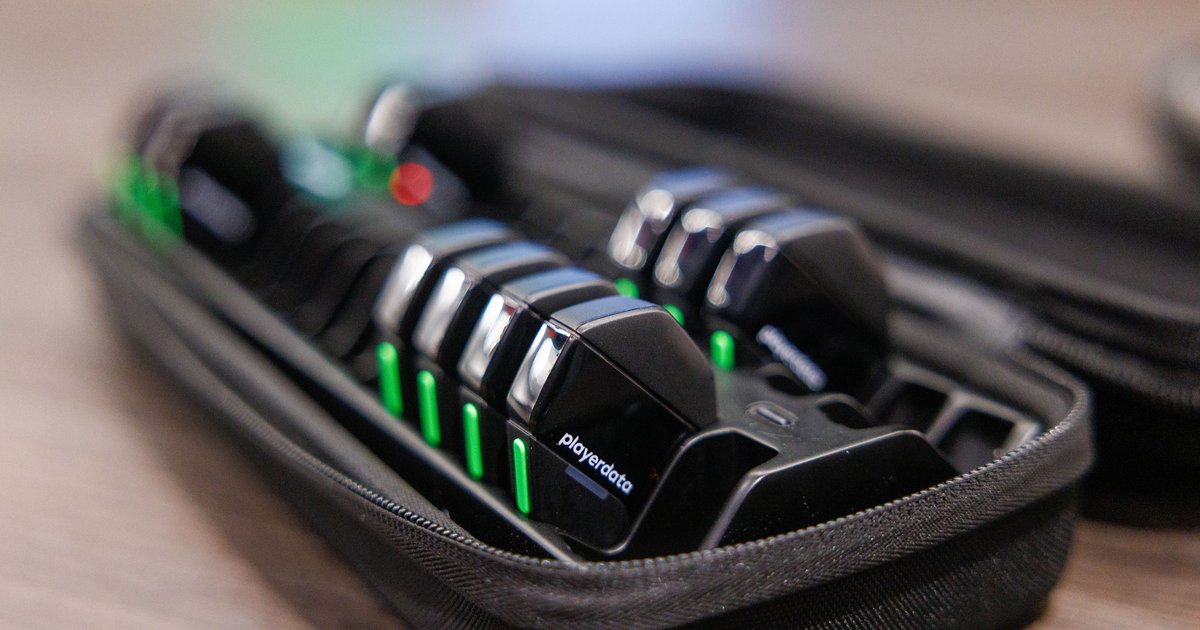
High school soccer coaches are adopting GPS tracking technology faster than ever. The reasons are straightforward: the same tools that professional clubs and college programs have used for years to manage player load, prevent injuries, and develop athletes more effectively are now accessible at a price point that works for high school athletic departments.
But not every GPS tracker on the market is built for the realities of high school soccer. This guide covers what to look for, what to avoid, and what the best GPS tracking system for high school soccer actually needs to do.
What High School Soccer Coaches Actually Need From a GPS System
High school soccer presents specific challenges that professional and college programs do not face in the same way. Rosters are larger relative to support staff. Budgets are tighter. Coaches are often running practice, managing substitutions, and analyzing data without a dedicated sport science team behind them.
The best GPS tracker for a high school soccer program isn't the most feature-rich system on the market. It's the system that gives coaches actionable information without requiring significant time or expertise to operate.
That means setup should take under thirty seconds per unit. Data should sync automatically before athletes leave the field. The coaching staff should be able to identify the most important insights — who worked hard, who is carrying elevated load, who is approaching a risk threshold — without running a complex analysis.
The Metrics That Matter Most for High School Soccer
High school soccer coaches evaluating GPS systems should focus on a core set of metrics that directly inform the decisions they make every week.
Total distance tells coaches how much physical work was done in a session. It is the baseline measure of volume and is useful for comparing sessions week to week and identifying players doing significantly more or less work than their teammates.
High intensity running distance tells coaches how much of that work was done at speeds where real physical demand accumulates. Managing high intensity running across a demanding schedule is one of the most important things a high school coach can do to keep players healthy.
Sprint distance and sprint count tell coaches whether players are getting the high-speed work they need to maintain speed capacity across a long season. Athletes who never sprint at high percentages of their maximum in practice will lose speed capacity over time.
Accelerations and decelerations capture the explosive, reactive movements that place the most stress on an athlete's body in soccer — the cuts, the direction changes, the short bursts that happen continuously throughout a match.
Workload score synthesizes all of these into a single number that tells a coach at a glance whether an athlete is carrying too much, not enough, or landing in the right range heading into a game week.
What to Look for in a GPS System Built for High School Soccer
No sports science staff required. The system should be designed for coaches, not analysts. If the platform requires specialist knowledge to interpret the data, it will not get used consistently by a high school coaching staff.
Automatic data sync. Data should reach the coaching staff before athletes leave the field — not after a manual download process that requires collecting every unit and connecting to a laptop.
Athlete-facing app. The best GPS systems for high school soccer give athletes access to their own data directly on their phones. When players can see their speed, their workload, and their high intensity output after every session, the culture around training changes. Players become invested in the data and competitive about the work.
Portability. A GPS system for high school soccer needs to travel to away games, to tournament venues, and to practice fields that may not have any technical infrastructure. The entire system should fit in a backpack and be operational without internet access at the venue.
Indoor capability. High school programs often train indoors during winter months or inclement weather. A GPS system that only works outdoors leaves entire phases of the training year unmeasured.
Transparent pricing. High school athletic departments operate on real budget constraints. The best GPS systems for high school soccer offer per-unit pricing that scales with the program.
Why High School Soccer Programs Are Choosing Wearable GPS
High school soccer programs spend far more time in training than in games. A system that cannot measure what happens in practice cannot support load management, injury prevention, or the progressive physical preparation that keeps athletes healthy across a season.
Wearable GPS measures every session — practice, conditioning, and matches — building the complete physical picture that good coaching decisions require.
Frequently Asked Questions
What is the best GPS tracker for high school soccer?
The best GPS tracker for high school soccer is one that requires no sports science expertise to operate, syncs data automatically before athletes leave the field, includes an athlete-facing mobile app, works indoors and outdoors, and is priced for a high school athletic department budget. PlayerData meets all of these criteria and is used by high school programs across the country alongside college programs and national federations.
Do high school soccer players need GPS trackers?
GPS trackers in high school soccer benefit the coaching staff as much as the players. Coaches gain objective data on player workload, high intensity output, and physical preparation. Players gain visibility into their own development and objective feedback on their effort. The combination changes both how coaches plan practice and how players engage with training.
How much do GPS trackers cost for a high school soccer team?
GPS tracker pricing for high school soccer varies by provider. The most accessible systems offer per-unit pricing in the range that fits a typical high school athletic department budget. PlayerData offers transparent per-unit pricing — contact our team for current pricing for your roster size.
Learn more about PlayerData for soccer.
See what GPS data can do for your soccer program
We'd love to show you what's possible with PlayerData.
Submit your information below to book a demo. We're ready when you are.
.png)
.png)