IMU-Derived Distance and Speed: How PlayerData Tracks Indoor Athletes Without GPS

GPS satellites don’t reach inside a gymnasium, a field house, or an indoor training facility. For sports that compete and train primarily indoors, this has been one of the most significant limitations of wearable performance tracking technology. PlayerData has solved it.,

Traditional GPS units calculate distance and speed by connecting to a network of satellites orbiting overhead. In outdoor environments this works reliably. Move inside a standard building and the satellite connection drops.

The data stops.

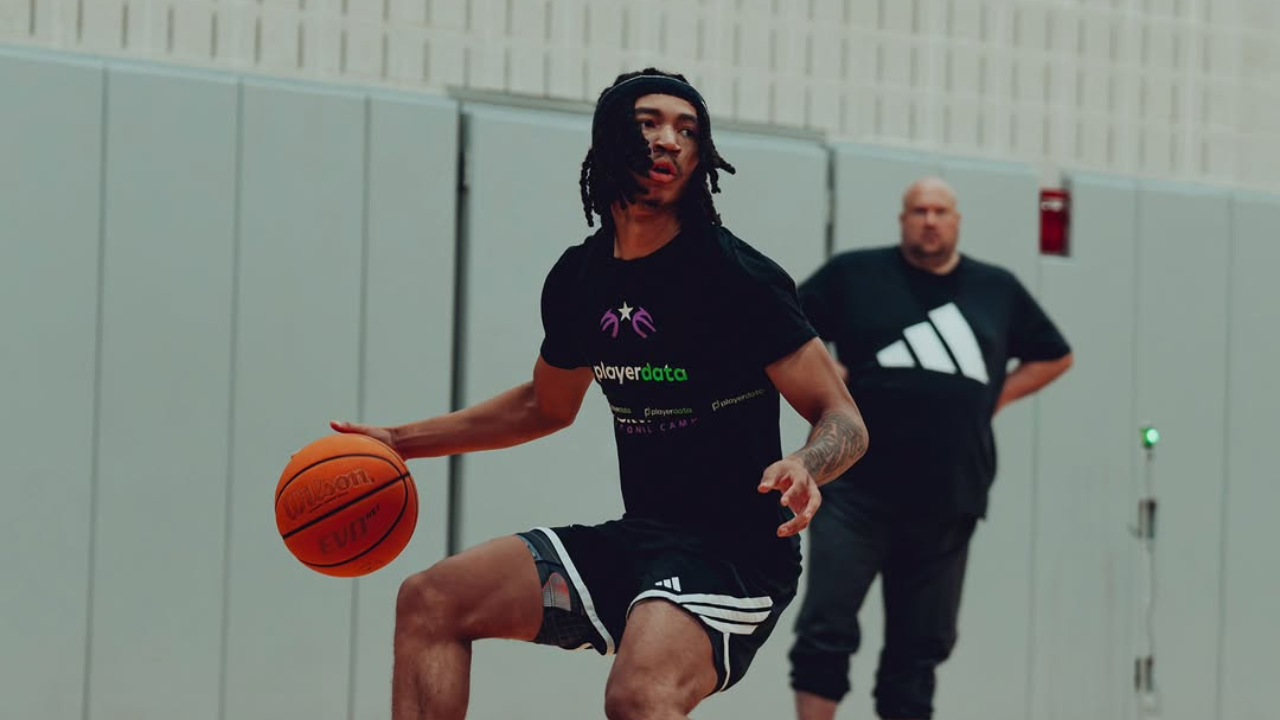
This has been a major gap for basketball programs for obvious reasons. The physical work that happens every time they step in the gym determines how prepared the athletes are for games. Without indoor tracking, all of it is invisible.

PlayerData now offers two solutions for indoor tracking. The first is an LPS, local positioning system, that uses ultra-wideband anchors set up around the court to replicate GPS-quality outdoor metrics in an indoor environment. The second, and the focus of this article, is IMU-derived distance and speed, a technology that requires no additional hardware at all.

How IMU-Derived Distance and Speed Works

Every PlayerData EDGE Air unit contains an IMU, an inertial measurement unit, alongside its GPS and LPS hardware. The IMU contains accelerometers that measure movement in all three axes simultaneously. PlayerData uses a custom model trained on this accelerometer data to calculate distance and speed estimates without relying on satellite connection. And these calculations can be viewed in real time from a phone, tablet, or laptop when paired with PlayerData's CONNECT live data gateway.

When an athlete moves from an outdoor training field into an indoor facility in the same session, the system transitions automatically. No action is required from the coach. When GPS signal quality drops below PlayerData's threshold, measured by satellite count and horizontal accuracy, the platform automatically backfills distance and speed metrics using IMU calculations instead. The data flows into the same dashboard, the same reports, and the same athlete app without interruption.

LEARN MORE ABOUT PLAYERDATA BASKETBALL

What IMU-Derived Metrics Are Good For

PlayerData's IMU-derived distance metric is particularly accurate for total session distance. Across one, two, and three hour sessions, the margin of error on total distance is small, a single-figure percentage that is non-impactful for load management decisions. For coaches using distance as a volume proxy to understand how much physical work an athlete did in an indoor session, the IMU-derived figure is reliable and actionable, particularly for basketball where athletes are moving at moderate speeds across a compact court.

Why This Is a Breakthrough for Basketball

Basketball programs using PlayerData can now track every practice, pickup, individuals, outdoor conditioning, agility work in a weight room, and of course game days, in a single continuous platform with a simple workflow. One same unit. One app. The same reports. Whether the session happened in a high school gym while practicing on the road or in your home arena during an actual game.

That continuity and consistency makes year-round load management possible for basketball programs in a way it has never been before.

‍

‍

Ready to see what PlayerData can do for your program?

Whether you're college program, national team, or building out a prep powerhouse, we'd love to show you what's possible with PlayerData.

Submit your information below to book a demo. We're ready when you are.

‍

‍

‍

IMU-Derived Distance and Speed: How PlayerData Tracks Indoor Athletes Without GPS

October 22, 2026
IMU Distance

Traditional GPS units calculate distance and speed by connecting to a network of satellites orbiting overhead. In outdoor environments this works reliably. Move inside a standard building and the satellite connection drops.

The data stops.

This has been a major gap for basketball programs for obvious reasons. The physical work that happens every time they step in the gym determines how prepared the athletes are for games. Without indoor tracking, all of it is invisible.

PlayerData now offers two solutions for indoor tracking. The first is an LPS, local positioning system, that uses ultra-wideband anchors set up around the court to replicate GPS-quality outdoor metrics in an indoor environment. The second, and the focus of this article, is IMU-derived distance and speed, a technology that requires no additional hardware at all.

How IMU-Derived Distance and Speed Works

Every PlayerData EDGE Air unit contains an IMU, an inertial measurement unit, alongside its GPS and LPS hardware. The IMU contains accelerometers that measure movement in all three axes simultaneously. PlayerData uses a custom model trained on this accelerometer data to calculate distance and speed estimates without relying on satellite connection. And these calculations can be viewed in real time from a phone, tablet, or laptop when paired with PlayerData's CONNECT live data gateway.

When an athlete moves from an outdoor training field into an indoor facility in the same session, the system transitions automatically. No action is required from the coach. When GPS signal quality drops below PlayerData's threshold, measured by satellite count and horizontal accuracy, the platform automatically backfills distance and speed metrics using IMU calculations instead. The data flows into the same dashboard, the same reports, and the same athlete app without interruption.

LEARN MORE ABOUT PLAYERDATA BASKETBALL

What IMU-Derived Metrics Are Good For

PlayerData's IMU-derived distance metric is particularly accurate for total session distance. Across one, two, and three hour sessions, the margin of error on total distance is small, a single-figure percentage that is non-impactful for load management decisions. For coaches using distance as a volume proxy to understand how much physical work an athlete did in an indoor session, the IMU-derived figure is reliable and actionable, particularly for basketball where athletes are moving at moderate speeds across a compact court.

Why This Is a Breakthrough for Basketball

Basketball programs using PlayerData can now track every practice, pickup, individuals, outdoor conditioning, agility work in a weight room, and of course game days, in a single continuous platform with a simple workflow. One same unit. One app. The same reports. Whether the session happened in a high school gym while practicing on the road or in your home arena during an actual game.

That continuity and consistency makes year-round load management possible for basketball programs in a way it has never been before.

‍

‍

Ready to see what PlayerData can do for your program?

Whether you're college program, national team, or building out a prep powerhouse, we'd love to show you what's possible with PlayerData.

Submit your information below to book a demo. We're ready when you are.

‍

‍

‍