

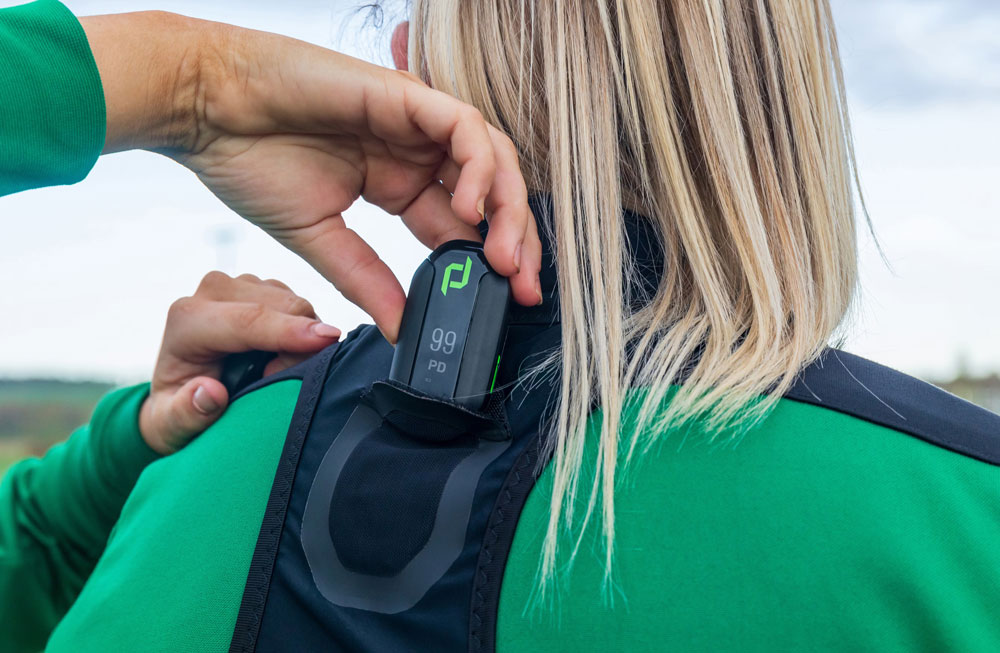
When coaches evaluate GPS tracking systems, most of the conversation centers on metrics: what data is collected, how it is reported, and how it compares across platforms. Less attention goes to where the device sits on the body. Placement directly affects data quality.
The most accurate GPS and IMU data comes from a device worn securely between the shoulder blades. This is why the vest has become the standard form factor across professional and elite sport.
Why Between the Shoulder Blades
The upper back is the most stable point on the body during athletic movement. It sits close to the center of mass, moves predictably relative to the rest of the body, and is not directly involved in the limb movements that generate the accelerations, decelerations, and direction changes the device is trying to measure.
A device worn here captures a clean signal. The unit moves with the athlete's trunk, which is what volume and intensity metrics are designed to reflect.
What Happens When Placement Changes
Hip placement is less reliable and repeatable. The hip rotates independently during running, cutting, and lateral movement, meaning the device is capturing movement that reflects hip mechanics as much as overall athlete load. Further, athletes of different sizes and different gaits can alter data. That variability adds noise to the data, which can reduce validity and reliability across a session.
However, PlayerData has worked directly with college basketball programs who have a preference for wearing units on the hip, and has solved for reliability on an individual player basis. It’s just generally recommended to keep the device between the shoulder blades for the best results.
Shoe or boot placement, used by some tracking solutions in soccer, creates a different problem. Feet are how soccer players engage with the ball. Strapping a unit over a boot changes how a cleat feels, adds weight and bulk to the foot, and introduces a foreign sensation that athletes actively notice. The feedback from players is consistent: it gets in the way.
Further, the goal for any practitioner is hidden monitoring, and monitoring athlete external load without directly interfering with the primary focus, which is sport performance. Foot tracking crosses that barrier and can disrupt technical performance, which is the worst case scenario. A tracking solution that disrupts the sport is not a solution coaches or athletes will sustain.
What Athletes Experience With a Vest
The vest format has one reputation problem: athletes assume it will be uncomfortable, distracting, or carry a stigma for some male players due to the optics of the vest. In practice, the opposite is true.
PlayerData hears from athletes regularly that they forget they’re wearing the unit within minutes of putting it on. The device is lightweight, the vest fits close to the body, and once practice starts, there is nothing to notice. In fact, recently, a high school football team in Texas who uses PlayerData forgot to bring their units on the bus for an away game, and the coach commented that several players still requested to wear their empty vests under their jerseys for the game.
That said, for athletes who prefer not to wear a vest at all, PlayerData offers unit pouches sewn directly onto compression shirts or undershirts. The device sits in the same optimal position between the shoulder blades, embedded in clothing the athlete is already wearing. No vest needed.
The Bottom Line on Placement
A device in the optimal position collects clean, reliable data that coaches can trust. A device in alternative positions can still work, but it does introduce variability.
The vest is not an arbitrary choice. It’s where the data is best. The gold standard remains shoulder blade or thoracic spine mounted.
See what player tracking can do for your program
We'd love to show you what's possible with PlayerData.
Submit your information below to book a demo. We're ready when you are.


.png)